


Perspectives
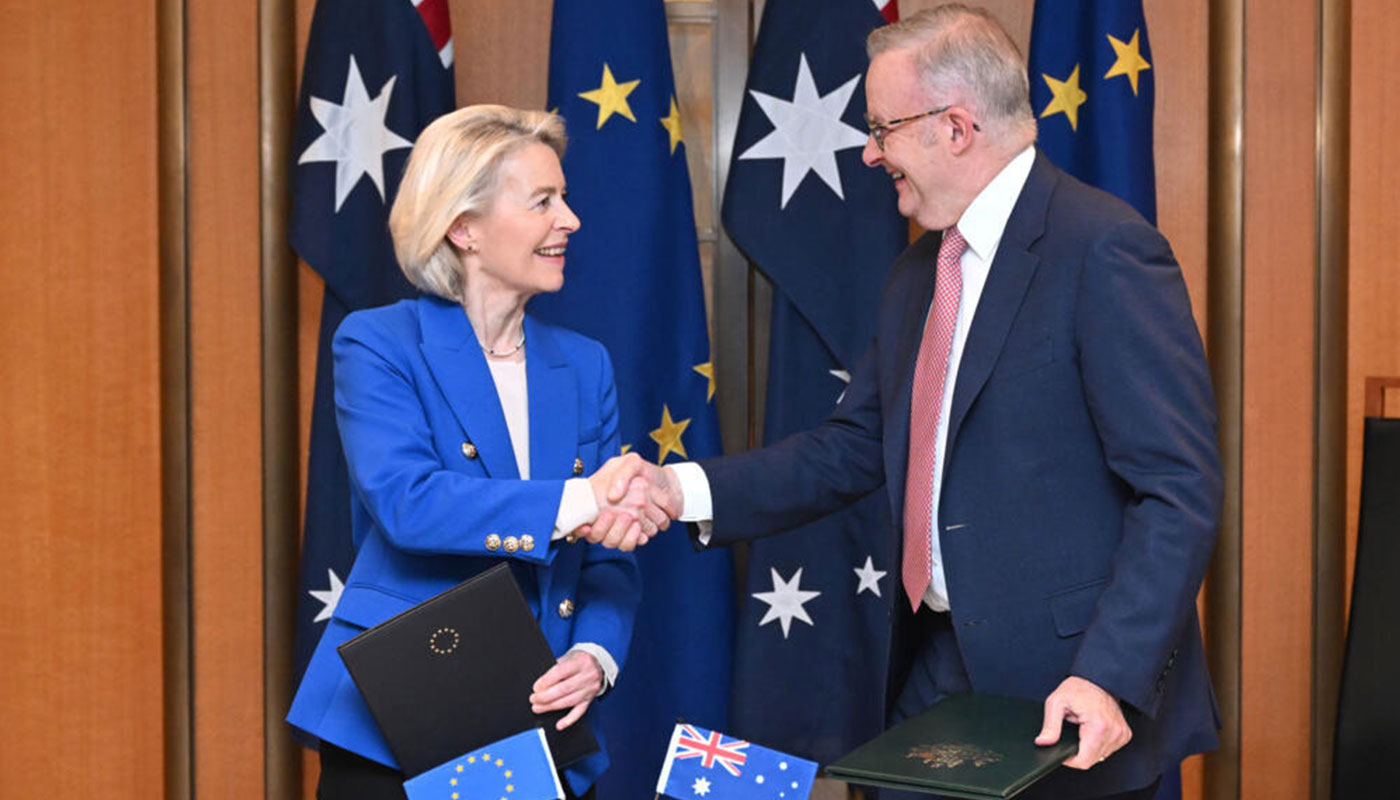
EU and Australia Strike Broad Trade Pact as Allies Diversify Away From U.S. Shocks
The European Union and Australia have agreed to a wide-ranging trade deal that would remove most tariffs between the two economies and deepen cooperation on strategically important supply chains, including critical minerals. The agreement caps nearly eight years of negotiations and reflects a broader push by many U.S. allies to reduce single-country exposure amid increasingly unpredictable geopolitics and trade policy.
Under the terms outlined by officials, the EU is set to eliminate about 98% of its duties on Australian exports, covering categories such as wine, dairy, grains, and seafood. Australia, in turn, would remove more than 99% of tariffs on EU goods, with key beneficiaries expected to include European dairy, vehicles, and chemicals. Both sides presented the deal as a practical step toward making trade flows more resilient, at a time when traditional assumptions about the stability of global rules are being tested.
A long negotiation ends with a strategic bargain
Talks began in 2018 but stalled in 2023 amid disagreements over agricultural market access and quotas, particularly around Australian beef and lamb, while the EU pushed for improved access to Australia’s critical minerals and reduced barriers. Momentum returned as both sides intensified efforts to diversify trade relationships in response to higher U.S. tariffs and a more uncertain external environment.
The European Commission expects EU exports to Australia could grow materially over the coming decade, with annual export value projected to rise to €17.7 billion. The EU already runs a large goods trade surplus with Australia, and the trade mix reflects complementary strengths: the EU imports mineral and vegetable products, while exporting machinery, transport equipment, and chemicals.
Critical minerals move to the center of the deal
One of the most strategically important components is the EU’s access to supplies of critical raw materials from Australia, including aluminum, lithium, and manganese. These inputs are vital for batteries, industrial manufacturing, and a range of technology supply chains. The EU has repeatedly argued that critical-mineral trade can be disrupted quickly by geopolitical and economic shocks, and that partnerships with reliable suppliers are central to economic security planning.
The agreement also fits into a wider effort by European policymakers to reduce reliance on China in certain mineral categories, particularly as export controls and tighter licensing regimes have become more common.
Safeguards, security, and a broader partnership frame
To address political sensitivities, the pact includes a bilateral safeguard mechanism that would allow the EU to take protective measures if import surges from Australia materially harm EU markets in sensitive categories. The broader framing is not limited to trade. The EU and Australia also signaled stronger cooperation in security-related areas, including crisis management, maritime security, and disruptive technologies, including AI.
Part of a larger hedging strategy
The deal is also being read as part of a larger trend: many U.S. partners are accelerating trade and security arrangements with one another to reduce vulnerability to sudden shifts in U.S. policy. European officials and allied leaders have increasingly stressed that hedging does not mean an immediate break with the United States, but rather a gradual effort to build optionality across trade, energy, technology, and defense relationships.
For the EU, the Australia agreement follows other recent moves to broaden trade ties, including the conclusion of a deal with India and progress on agreements with Indonesia and the Mercosur bloc in South America. Together, these efforts signal a strategic push to widen market access, secure inputs for industrial policy, and reduce exposure to geopolitical shocks across the global trading system.